
My SZN Guide · Move · 🍂 Autumn
Pilates at Home: A Beginner's Guide You'll Actually Keep Up
A twenty-minute mat routine, what to expect in the first fortnight, and how to keep it going when the clocks change.
Guide · free · 20 minutes a session · 8 min read
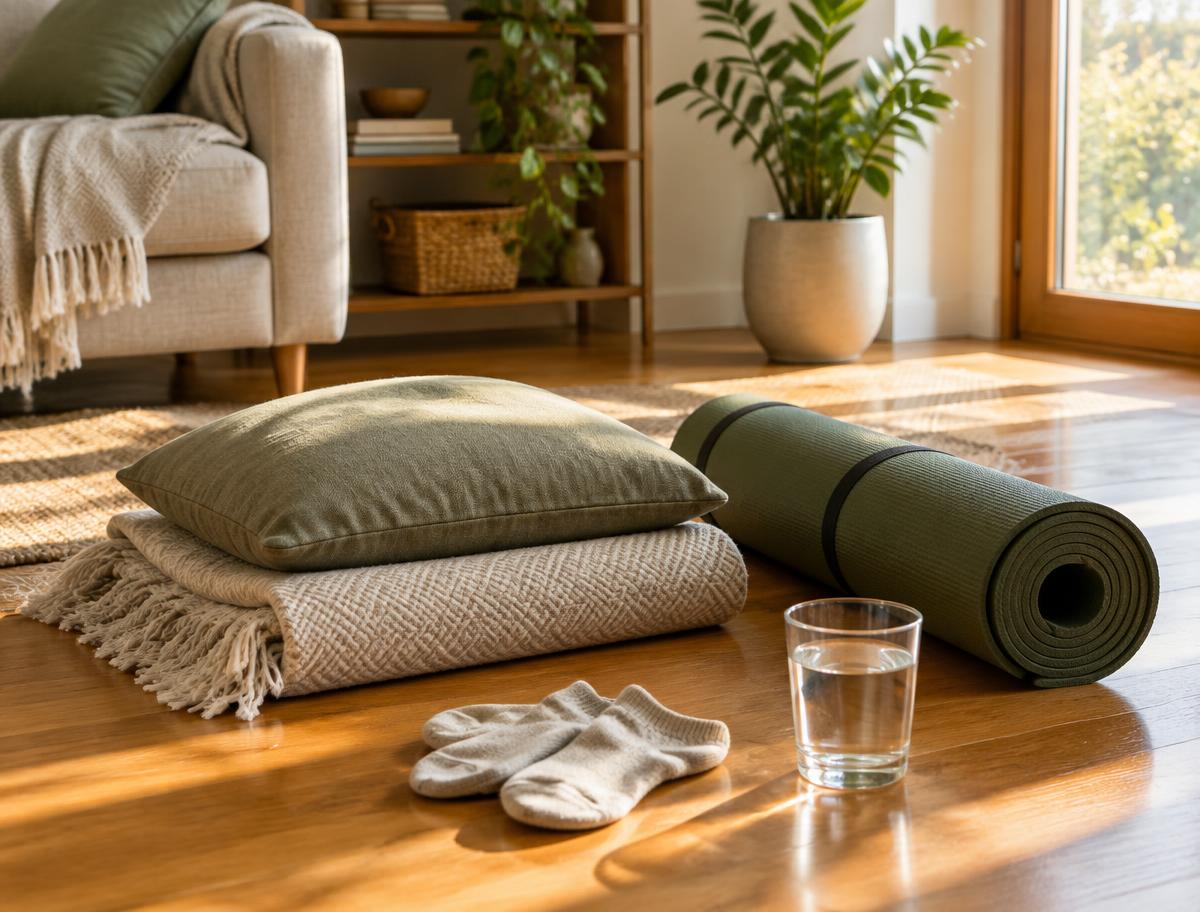
Pilates has quietly become the movement people stick with, and the reason is unglamorous: it needs a mat, a patch of floor roughly the size of a door, and twenty minutes.
That makes it a good fit for the half of the year when going out to exercise stops being appealing — the bit between the clocks going back and the mornings getting light again.
This is a starting point rather than a programme. Six movements, a sense of what the first fortnight feels like, and some honest notes on making it a habit rather than a New Year's fortnight.
What you actually need
A mat, or a folded blanket on a carpet. Bare feet or grippy socks. Enough space to lie down and stretch your arms overhead without hitting a radiator.
That's the whole list. Reformer classes are a different thing entirely — a studio, a machine and a price tag — and you don't need one to begin. Small props (a resistance band, a soft ball) are nice after a couple of months, not before.
Clothes you can see your own knees in help more than you'd expect: most of learning Pilates is noticing what your body is doing.
A twenty-minute beginner routine
- Breathing, 2 minutes. Lie on your back, knees bent, feet flat. Breathe wide into your ribs rather than up into your shoulders. This is the whole method in miniature — everything else is built on it.
- Pelvic tilts, 3 minutes. Gently roll the pelvis so the lower back flattens, then release. Small, slow, unhurried. Ten to twelve of them.
- Knee folds, 3 minutes. From the same position, lift one foot to a tabletop position and return it. Alternate. Keep the middle of you quiet while the leg moves.
- Bridges, 3 minutes. Peel the spine off the floor one vertebra at a time, pause, roll back down the same way. Eight repetitions with a proper pause at the top.
- The hundred, modified, 3 minutes. Head and shoulders down if you're new, knees bent, arms pumping small beside you. Five breaths in, five out, ten times.
- Side-lying leg lifts, 3 minutes. Lie on one side, stack the hips, lift the top leg to hip height and lower with control. Ten each side.
- Spine stretch and rest, 3 minutes. Sit tall, legs long, roll forward over the legs and back up. Finish lying still for a minute — this bit counts.
Sensible caution
Work at a level that feels manageable and stop anything that hurts rather than pushing through it. If you're pregnant, recently post-natal, recovering from injury or surgery, or have a condition that affects movement, get advice from a GP, physiotherapist or a qualified instructor before starting something new. Beginner-level videos from a certified teacher are worth an hour of anyone's time early on.
The first fortnight, honestly
- Session one feels like almost nothing is happening. This is normal and not a sign you're doing it wrong.
- Day two after the first session is usually when you notice your abdominals exist.
- By session four the breathing stops being something you have to think about.
- Somewhere around week two the movements start feeling smaller and more precise rather than bigger. That's progress in Pilates.
- Three shortish sessions a week beats one heroic one. Consistency is the entire trick.
Making it fit the season you're in
Autumn and winter are the easy sell: it's dark, it's wet, and a mat by a lamp at seven in the morning is genuinely more appealing than a run. Pair it with the light — a session before the sun is up, curtains open so you see it arrive.
Spring and summer, take it outside. A mat in the garden or on a flat patch of park before the day heats up is a different and much nicer experience, and it stops the routine feeling like a winter-only habit that quietly lapses in May.
If you travel or your week is chaotic, keep a ten-minute version — breathing, bridges, side-lying, spine stretch. A short session done is worth more than a long one skipped.
How to keep it going
- Attach it to something that already happens: the kettle, the school run, the end of the working day.
- Leave the mat out. The single most effective habit trick there is.
- Pick a fixed number of sessions a week, and make it one fewer than you think you can manage.
- Keep it in your SZN so it survives the season change rather than the January enthusiasm.
- Take one class occasionally if you can — an hour with a teacher fixes things no video will spot.
Keep it for this SZN
Keep the version you'll genuinely do, give it a day in Plan, and tick it off as you live it.
- Do 20 minutes of Pilates at homeMat, floor, twenty minutes, three times a week.Kept for later 🤎
- Move before the day startsOne short session before anything else.Kept for later 🤎
- Take the mat outsideFor the first properly warm morning.Kept for later 🤎
Anything you keep lands in My Keeps — ready to plan, live and remember.
Questions people ask before they start
- Can you really learn Pilates at home?
- The mat repertoire, yes — it was designed to be done on the floor with no equipment. A few sessions with a qualified teacher, in person or online, will sharpen your technique, but you do not need a studio to begin.
- How often should a beginner do Pilates?
- Two or three short sessions a week is a realistic starting point, with rest days in between. Most people find frequency matters more than length.
- What is the difference between Pilates and yoga?
- Broadly, yoga holds shapes and gives more attention to breath and stillness; Pilates moves through controlled repetitions with a strong focus on the deep muscles of the trunk. Plenty of people do both.
- What is reformer Pilates, and do I need it?
- Reformer Pilates uses a spring-loaded machine in a studio. It's a lovely thing to try and completely optional — the mat work stands on its own.
My SZN editorial. Opening times, prices and local conditions change — always check with the place you're visiting before you travel.
More My SZN Guides

My SZN Guide · Autumn
Autumn Activities in the UK: What's Actually Worth Doing
A season's worth of British autumn — the walks, the days out, the kitchen and the evenings in.
8 min read

My SZN Guide · Sip
Matcha at Home: Iced, Hot and Everything In Between
The ratios, the kit you can skip, and how the same tin turns into an iced summer drink or a spiced autumn one.
7 min read
My SZN Guide · Reset
The September Reset: 25 Small Ways to Start Autumn Well
September is the real new year. Twenty-five small resets — house, routine, kitchen, calendar — none of which require becoming a different person.
8 min read